Forex Trading In Ghana
Kojo Forex
Author
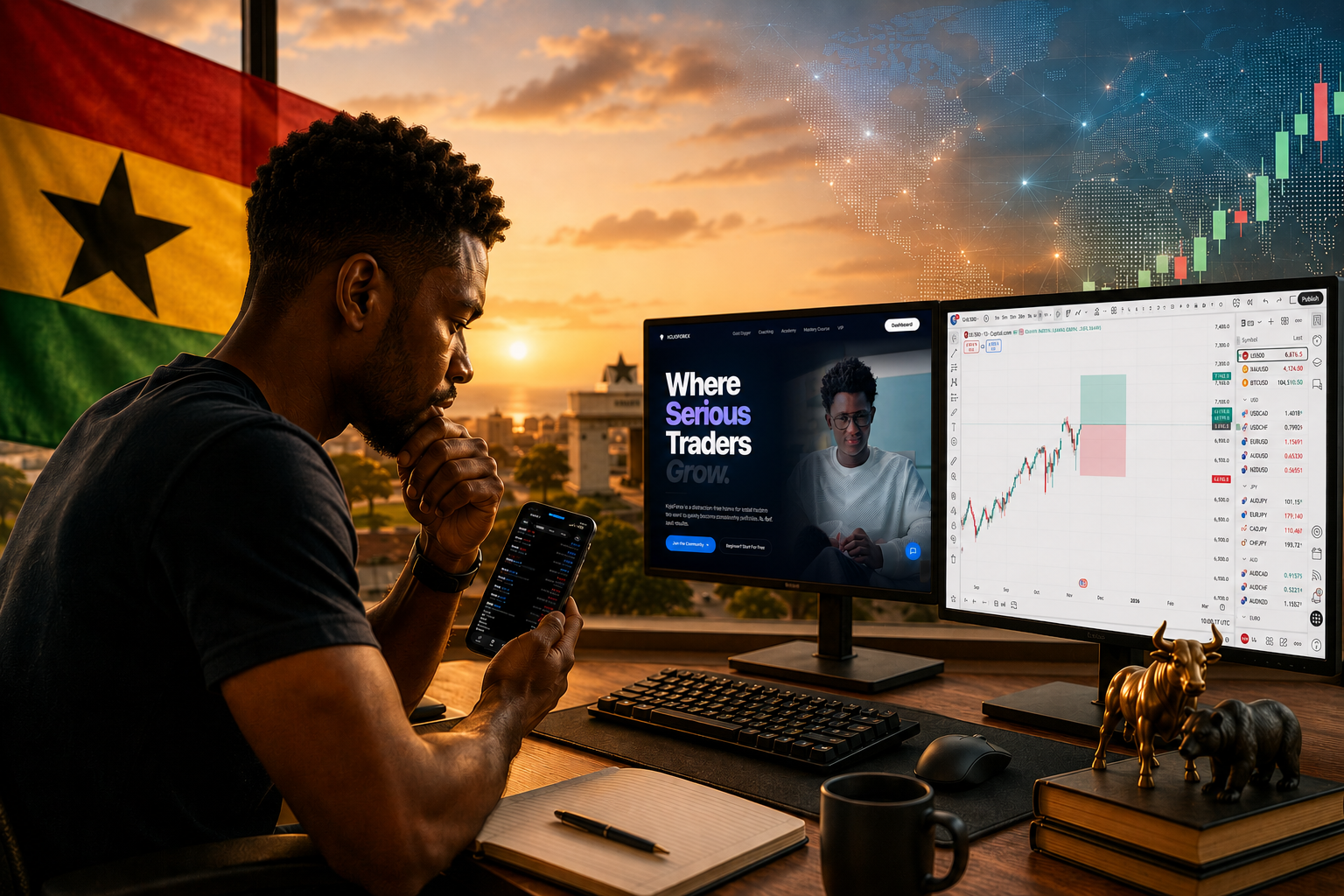
Walk into any university hostel, listen in on conversations on public transport, or sit in on publicgatherings where people talk about side hustles or ways to earn an income online, and forex comes up. It has quietly become one of the most talked-about ways to make money online in Ghana, right alongside crypto and dropshipping.
But here's the problem. Ask ten different people if forex trading is even legal in Ghana, and you will get ten different answers. Some will swear it's banned. Others will tell you their broker is "fully licensed" without knowing what that actually means. Meanwhile, signal sellers in every other WhatsApp or Telegram group are promising to double your money in a week.
Let's clear all of that up properly.
What Really is Forex Trading?
Strip away the jargon, and forex trading is simply this: buying one currency while selling another, speculating that the one you bought will rise in value against the one you sold.
Think of it like this. If you believe the US Dollar is about to get stronger against the Ghana Cedi, you "buy" that pair. If the Dollar does strengthen, you profit. If it weakens instead, you lose. That's the entire concept, dressed up in technical language most beginners never needed in the first place.
To put the size of this market in perspective, forex trading moves an estimated $6.6 trillion every single day globally. That is not a typo. It is the single largest financial market on Earth, dwarfing stock markets combined.
So, Is Forex Actually Legal in Ghana?
Yes. Forex trading is legal in Ghana, even though there isn't yet a dedicated licensing framework built specifically for retail forex trading. This is the part most people get confused about, so let's keep it simple.
There is no law banning forex trading in Ghana. There is also no specific local rulebook yet that licenses individual forex brokers the way banks or insurance companies are licensed. The Securities and Exchange Commission (SEC Ghana) oversees capital market activity, while the Bank of Ghana (BoG) manages the country's foreign exchange policy, and both are actively working on closing that gap. In February 2026, the SEC presented draft guidelines to financial sector stakeholders in Accra, the most concrete step yet toward formally regulating and licensing forex trading in the country.
In short: trading is allowed, and the rules around it are still being finalized.
How Ghana’s Timezone Works in Your Favour as a Trader
Here's something most beginners never think about: Ghana's timezone gives you an advantage most traders elsewhere don't get.
Ghana sits on GMT. That lines up directly with the London trading session, which runs from 8:00 AM to 4:00 PM. Later in the day, the New York session opens and overlaps with London from 1:00 PM to 4:00 PM GMT, which is when the market is most active and price moves the most. Both of these windows fall right inside a normal Ghanaian day.
What that means in practice: you don't need to stay up at 3am or set alarms in the middle of the night to catch good trading conditions. The best hours to trade line up naturally with your normal schedule.
How Are Ghanaians Actually Funding Their Accounts?
Funding an account is easier than most people expect. Mobile money options are widely accepted by international brokers, with deposits often landing in minutes, alongside standard bank transfers and debit card options.
This is exactly why I recommend Exness to anyone starting out. It's properly regulated, supports mobile money deposits, and has fast, reliable withdrawals, everything a Ghanaian trader actually needs from a broker. Click here to sign up today.
Why So Many Beginners Lose Money When Getting Started
Here's the uncomfortable truth nobody tells you when you're getting started: most beginners don't lose because forex is rigged. They lose because they skip the boring part.
People jump straight into live trading with real money before they understand risk management, position sizing, or how to actually read a chart with any structure. Excitement skips the homework, but the market does not care how excited you are, and it will not slow down just because you're new.
The traders who actually make it past their first year are not the ones who got a lucky win early. They're the ones who treated the learning phase as seriously as the trading phase itself.
What You Actually Need Before You Start
Forget the finance degree. You don't need one. What you actually need is structure, and a few non-negotiables before you risk a single cedi.
Real education, not random YouTube videos. Skip the "how I made $2,000 in 1 hour" clips online. What you need is education that points you in the right direction entirely, toward the right platforms to actually learn on, and the right tools to trade with. This is exactly what KojoForex.com was built for. With a free Forex Foundations course, a flagship Mastery Course covering institutional concepts and market structure, and an Academy available both online and in person right here in Accra, it's structured education built specifically to take you from zero to confident, not random clips with no system behind them.
Proof of consistency, not just one good screenshot. Before trusting anyone's "results," do your own background check. Has this person been consistently profitable over time, or are they only ever showing one big trading balance? A real track record shows up in how someone actually lives, not just in a single screenshot of a blue account.
A clear risk management plan before you trade. Know exactly how much you're willing to risk per trade before you ever open a position, not after a loss teaches you the hard way. This is precisely where KojoForex will really school you. Capital preservation, position sizing, and stop-loss discipline are treated as non-negotiable from day one, not an afterthought you pick up after losing money the hard way.
A community of other learners. Surround yourself with people on the same learning curve, so you're not making every beginner mistake completely alone. The KojoForex Telegram Community has over 230,000 active members getting real-time signals, daily market breakdowns, and direct updates, completely free to join.
Where to Actually Start
If you're ready to open a trading account with a globally regulated broker that supports Ghanaian mobile money deposits and more, start here: Open your trading account
From there, get the education and structure to actually use that account properly at kojoforex.com, real, structured education for Ghanaian traders and traders across Africa, from the completely free Starter program to the Academy, available both online and in person right here in Accra.
Conclusion
Forex trading in Ghana is legal, it's growing fast, and the country is actively catching up on regulation to protect the people stepping into this space. The market is not going anywhere, and the people getting in early with the right structure are the ones who will be years ahead by the time everyone else catches on.
The opportunity is real, but only for those who treat it like a skill worth learning properly. Open your account, get the right education behind you, and start building the kind of consistency that actually changes your financial future, not just a screenshot of it.